Origin Guide
Madagascar Vanilla
Roughly two-thirds of the world’s vanilla, and the standard everything else is measured against — rich, creamy, caramel-forward Bourbon beans. Shop beans, ground, powder, and extract below.
Species
Planifolia & Pompona
Share of world supply
Roughly two-thirds
Elevation
30–50 m
Certification
Certified Organic available
Shop
Shop Madagascar vanilla
Prices start at the smallest available size.
Beans
 Certified OrganicBourbon
Planifolia Vanilla Beans, Grade A
The flagship. Gourmet-grade Bourbon beans, pliable enough to split and scrape.
Certified OrganicBourbon
Planifolia Vanilla Beans, Grade B
Extraction grade — drier beans built for making your own extract.
Certified OrganicBourbon
Planifolia Vanilla Beans, Grade A
The flagship. Gourmet-grade Bourbon beans, pliable enough to split and scrape.
Certified OrganicBourbon
Planifolia Vanilla Beans, Grade B
Extraction grade — drier beans built for making your own extract.
 Pompona Vanilla Beans
A different species entirely: bolder and spicier, with cinnamon and clove.
Pompona Vanilla Beans
A different species entirely: bolder and spicier, with cinnamon and clove.
Ground & Powder
 Certified OrganicBourbon
Ground Vanilla Beans
Whole Bourbon beans, ground. Nothing added — for dry applications.
Certified OrganicBourbon
Ground Vanilla Beans
Whole Bourbon beans, ground. Nothing added — for dry applications.
 Bourbon
Pure Vanilla Powder
Free-flowing and sweeter than ground, for foodservice and dry blending.
Bourbon
Pure Vanilla Powder
Free-flowing and sweeter than ground, for foodservice and dry blending.
Extract
 Certified OrganicBourbon
1X Pure Vanilla Extract
Single fold Bourbon extract — the strength most recipes assume.
Certified OrganicBourbon
1X Pure Vanilla Extract
Single fold Bourbon extract — the strength most recipes assume.
 Certified OrganicBourbon
2X Double Fold Vanilla Extract
Twice the bean per gallon, for production batches and frozen desserts.
Certified OrganicBourbon
2X Double Fold Vanilla Extract
Twice the bean per gallon, for production batches and frozen desserts.
 Pompona Vanilla Extract, 1X
Extract from the Pompona species — spicier, and unlike any Bourbon.
Pompona Vanilla Extract, 1X
Extract from the Pompona species — spicier, and unlike any Bourbon.
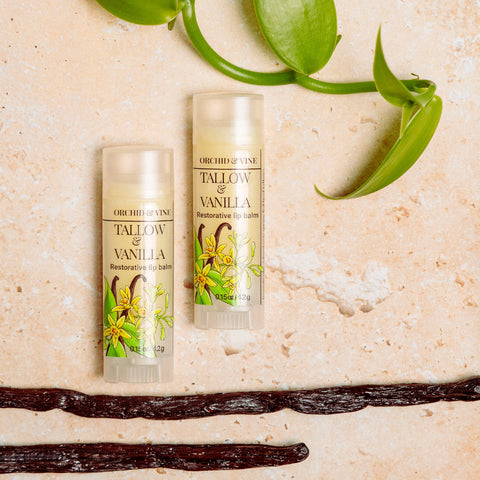
Also Made with Madagascar Vanilla
Choosing
Which form do you need?
The same vanilla behaves very differently depending on how it is processed.
| Form | Best for | Why |
|---|---|---|
| Grade A beans | Splitting and scraping, custard, ice cream, visible seed specks | Higher moisture, pliable, easy to slice open by hand |
| Grade B beans | Making your own extract, infusions, syrups | Drier and less pliable, which is why they are the extraction standard |
| Ground vanilla | Dry mixes, rubs, baked goods where liquid would throw off a recipe | Whole bean, ground — nothing added |
| Vanilla powder | Foodservice, beverage bases, dry blending at scale | Carrier base makes it free-flowing and noticeably sweeter |
| 1X extract | General baking and standard recipe substitution | Single fold — the strength most recipes assume |
| 2X extract | Production batches, frozen desserts, anywhere flavor gets diluted | Double fold — twice the bean per gallon. 1X vs 2X explained |
Background
What “Bourbon” actually means
Bourbon vanilla is a region, not a variety — and it has nothing to do with bourbon whiskey. The name comes from the Bourbon Islands of the southwestern Indian Ocean: Madagascar, Réunion, the Comoros, and Mayotte. Vanilla planifolia grown and cured in that region is sold as Bourbon vanilla, and Madagascar is by far its largest producer. When a recipe calls for “Madagascar Bourbon vanilla,” this is what it means.
Our Madagascar Planifolia beans, Grade B beans, ground vanilla, powder, and both 1X and 2X extracts are all Bourbon vanilla. Our Madagascar Pompona is not — Pompona is a separate species, and the Bourbon designation applies only to planifolia. It is bolder and spicier than Bourbon, with cinnamon and clove notes, and worth trying precisely because it tastes nothing like what people expect from Madagascar.
Grown at 30–50 m elevation along the island’s northeast, where the combination of heat, rainfall, and long-established curing expertise produces the aroma profile the rest of the world is measured against: caramel, buttery, creamy.
Grading
Grade A and Grade B, plainly
Grading describes condition, not quality. Both grades come from the same plant and the same region; they are cured and sorted to different ends, and the right one depends entirely on what you are making.
Grade A — often sold as gourmet grade — retains more moisture. The beans stay supple, which is what lets you run a knife down one and scrape the seeds into a custard base. That is what you want when the vanilla is meant to be seen as well as tasted.
Grade B is drier and less pliable. It is not a lesser bean; it is a bean prepared for extraction, where suppleness is irrelevant and what matters is how the bean gives up its flavor into alcohol over weeks. If you are making your own extract, this is the one to buy.
We go through the sorting process in more detail in our guide to vanilla bean grading.
Questions
Madagascar vanilla, answered
Is Madagascar vanilla the same as Bourbon vanilla?
For Vanilla planifolia, effectively yes. “Bourbon” refers to the Bourbon Islands — Madagascar, Réunion, the Comoros, and Mayotte — so planifolia grown and cured in Madagascar is Bourbon vanilla. The one exception in our range is Madagascar Pompona, which is a different species and is therefore not Bourbon vanilla.
What is the difference between Grade A and Grade B Madagascar beans?
Grade A beans hold more moisture and stay pliable, so you can split and scrape them for custards, ice cream, and anything where you want visible seed specks. Grade B beans are drier and less pliable, which makes them the standard choice for making extract and infusions. Same plant, same region, different preparation.
Which Madagascar products are Certified Organic?
Five of the eight vanilla products: the Planifolia Grade A beans, the Planifolia Grade B beans, the ground vanilla, the 1X extract, and the 2X double fold extract. The Pompona beans, Pompona extract, and vanilla powder are not carried as Certified Organic. Each product page states its own certification.
Should I buy 1X or 2X extract?
1X single fold is the strength most recipes assume, so it is the safe default for general baking. 2X double fold uses twice the bean per gallon and is worth it where flavor gets diluted or frozen — production batches, ice cream, beverage bases. We compare them in detail in 1X vs 2X vanilla extract.
What is the difference between ground vanilla and vanilla powder?
Ground vanilla is whole Madagascar bean and nothing else, ground fine. Vanilla powder is built on a carrier base, which makes it free-flowing for dry blending at scale and noticeably sweeter than ground. Choose ground when you want pure bean; choose powder when you need it to behave predictably in a dry mix.
Do you sell Madagascar vanilla in wholesale quantities?
Yes. Most of the range is available in 11 pound / 5 kilo sizes, and extracts go up to the gallon. Tell us what you need on our wholesale quote form and we will price it for you.
Not sure which one you need?
Tell us what you are making and the volume you go through, and we will tell you which form of Madagascar vanilla fits — and send samples.